Illusion, Art and the Brain - a talk by Mike Sheehan
17th February 2026
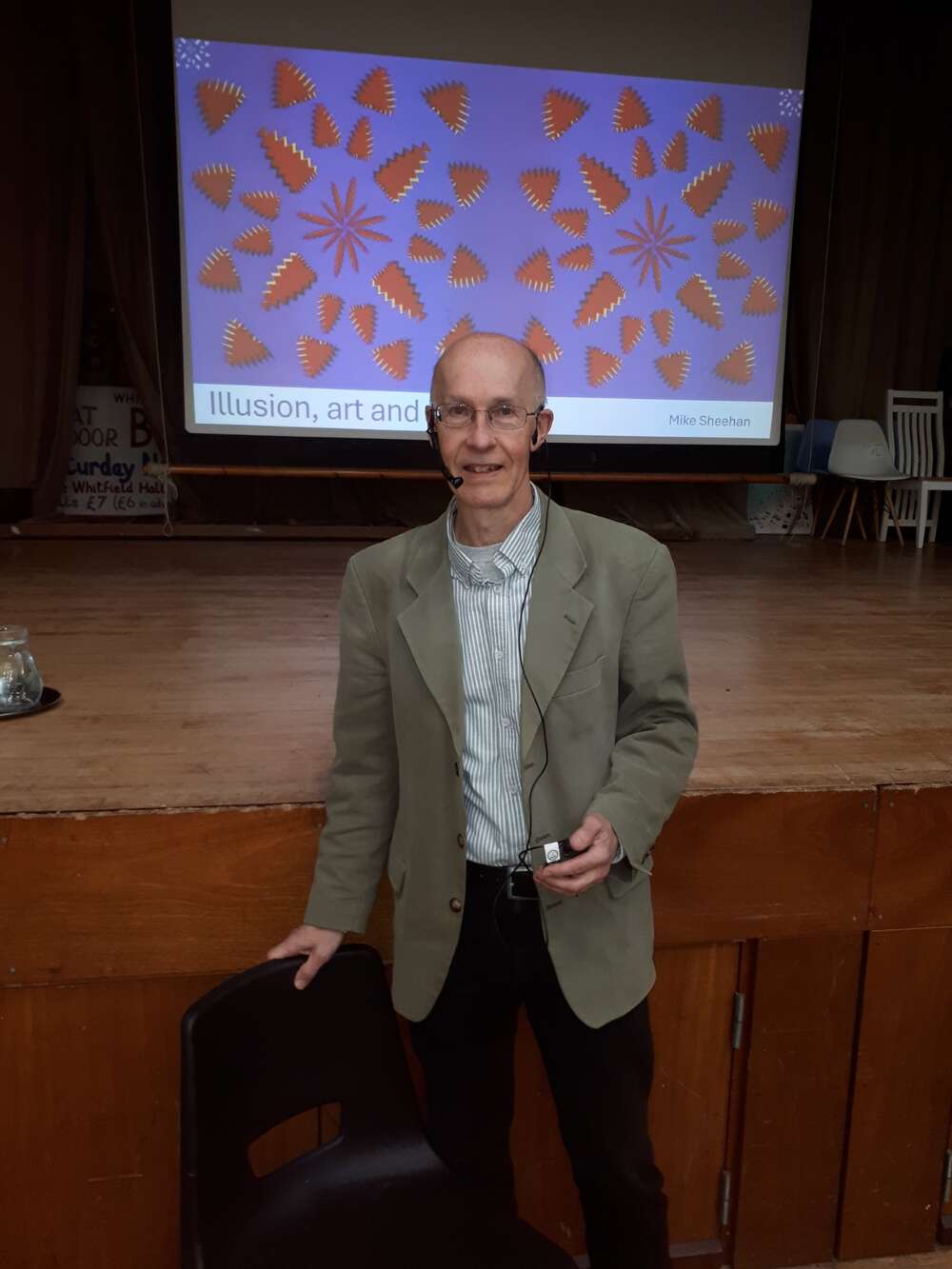
The General Meeting on 17 February welcomed Mike Sheehan, a neuroscientist to talk about Illusion, art and the brain. Mike shared some fascinating insights into how we take in information through our eyes, how this gets processed via the back of the eye and then interpreted via our brains.
Starting with a viewing of Hans Holbein’s famous portrait of the Ambassadors from 1533 (hanging in the National
Gallery), one of our audience correctly identified a figure at the front as a skull. A reminder that for all their riches the Ambassadors and we as viewers will ultimately face death. The skull can only be seen properly by standing underneath the painting since it is painted at an angle. We saw pictures of ducks that also look like rabbits, two
women's profiles which also look like a vase, fish standing out more strongly on some backgrounds than others, two people supposedly linking hands from opposite sides of a chasm (actually a floor painting), a tiled corridor which had a ripple effect creating height and a curve but was in fact level and straight, etc.
He told us that when light strikes a scene, some cells switch off their neighbours so we can still see the scene ahead. That is the way nocturnal creatures function at night. The human brain is therefore constantly compensating to allow us to see. When sunlight or other light shines during the day we see some colours differently though the colours have not changed. People who are colour blind (far more men in the
population than women) have some cells switched off permanently.
Artists use such knowledge to trick and entertain us e.g. Salvadore Daly's painting of Voltaire's face has an image of nuns within it under certain conditions, Monet painted haystacks at different times experimenting with light to create the images he wanted, Seurat painted lots of individual dots to create his seascapes. Humans are programmed to see faces in objects and when a baby is unsettled it may be calmed by viewing a human image. The key to all this is how the brain sees and responds and keeps us safe. Scientifically, artistically and for entertainment this knowledge matters.
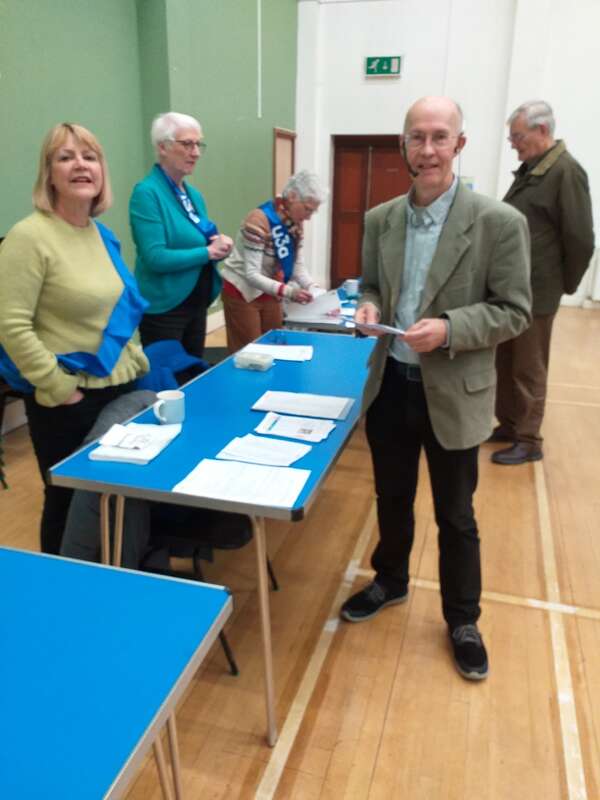
After questions Mike stayed on to chat to individuals. Pictures are of Mike, his talk header and chatting beforehand. Thank you Mike for a really insightful talk.
Contributed by Angela Dowling