Life of the Tower of London
7th April 2026
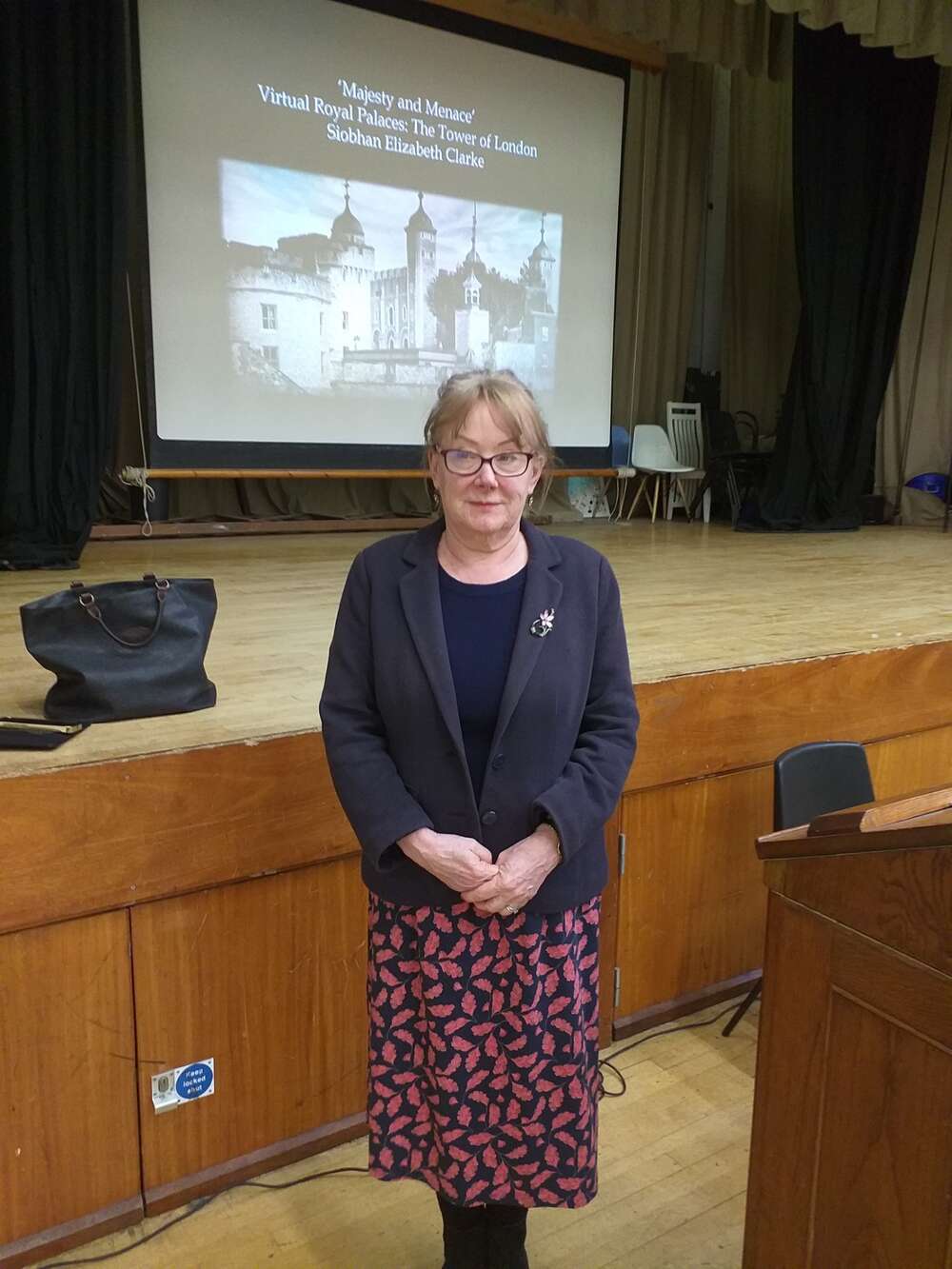
Siobhan Clarke, Guide Lecturer at Historic Royal Palaces (pictured) gave us an enthralling insight into the life of the Tower of London from earliest days to today. It is Britain’s oldest palace and most visited attraction. Its success may be traced to its location and its constant adaptation to circumstances. While many of us think of it as a prison, only a relatively small number of high profile prisoners considered a threat to early monarchs were held there before execution (ordinary people were sent to the Clink).
It is first and foremost a Royal Palace with chapels for worship and started as a fortress to repel invaders. Begun in 1078 under William the Conqueror, the Normans were a minority people against 2 million Anglo Saxons so an imposing fortress tower and defences were needed. Further fortifications were added later including a moat. There was also access via the Thames.
Tower Hill nearby was the main place of execution, which the public attended, though only 7 high profile prisoners were executed publicly at the Tower itself. Within the Palace Siobhan told us about the White Tower, St Thomas’ Tower, Wakefield Tower, Garden Tower, Beauchamp Tower and some of the various occupants at different times - Henry VI, the little Princes, Sir Thomas More, Thomas Cromwell, Anne Boleyn, Lady Jane Grey, her husband Guildford Dudley and his brothers, the later Queen Elizabeth I, Sir Walter Raleigh, Guy Fawkes, the Earl of Arundel, and the Jacobites after defeat at Culloden etc.
Tradition dictates that a monarch awaiting coronation will stay at the Tower the night before. Few Monarchs seem to have lived there preferring the comforts of other Royal Palaces.
The Tower also functioned as a menagerie, keeping animals gifted to the King from other monarchs including elephants, polar bears, lions and tigers till 1828 when they transferred to Regents Park Zoo. It also housed the Royal Mint for a while and still has an impressive armoury and the Crown Jewels as one of its most popular draws (though many were lost or melted down in the English Civil War), so its exhibits are what was created for the Restoration monarchs onwards. Queen Victoria was the first to open the Tower to the public from 1895 and her Yeoman Warders offered Tours. This proved very popular and the Tower has gone from strength to strength.
Thank you Siobhan for this wonderful presentation on the Tower of London. Definitely a place to visit.
Contributed by Angela Dowling